

Anti-data
It’s what’s not in there

As someone who has never even downloaded Spotify nor listened to an algorithmically generated playlist, you could make the argument that I’m unqualified to write a Substack piece on modern music streaming technology and culture. Or you could make the argument that I’m just the person to do it. Either way, it’s something I have thought about a great deal in the past few years, and it turns out there are many much greater minds than I that have been pondering and dissecting the subject at a much deeper level than my cursory thoughts and daydreams. Having just finished Liz Pelly’s scathing exposé of Spotify et al, I’m a little wiser to the issues of modern digital streaming and the history of commercialized music, both recent and beyond. The book is a bombshell. In a sane and equanimous society, the information revealed would be considered incriminating evidence. But in today’s capitalist world where more is perceived as better and average people worship the ultra wealthy, touting and believing (incorrectly) the idea that libertarian bootstrap aspirations and ideals make anything possible to even the most resource-deprived populations, the people that have slow-grifted the very soul of art and humanity get little more than a sideways glance at worst from the general public. Their behavior has become the new normal.
Data, data everywhere and not a drop to drink
I will attempt to convey several points in this piece, that I believe will ultimately jell into a cohesive stream of consciousness. I’ll start with data collection and distribution, because it is far and away the biggest takeaway from Mood Machine. Pelly focuses on Spotify and their practices, and while they are most likely some of the worst offenders, a central point she makes in the book that I am using to illustrate my thoughts herein is that your data, including basically everything you’ve ever done online or with a credit card, has most likely to some degree been collected, sold, studied, compared, digitized, stacked, regurgitated and spit back out in thousands of ways that are used in an attempt to try to shape not only your world, but the world as we all know it.
If we accept that a computer algorithm cannot replicate or understand the overall human physical, spiritual and emotional experience, then no matter how much data it collects from your life and habits, there is no thorough or holistic summary of you that it can accurately provide, period. Programmers that aspire to create “real” Artificial Intelligence will tell you it’s possible, but it is not, and by its very nature, never will be. At best it projects a diluted and shallow picture of its subject, and at worst it’s wildly inaccurate.
Star Trek: The Original Series, The Changeling, 1967
What a computer algorithm winds up making with your data is a series of snapshots, or a screenplay of things in your life that have already happened. It’s a two dimensional look at your shopping habits, political views, desires, likes, dislikes, musical and artistic selections, and where and when it all went down. All of this information winds up in profiles that are used to predict what you (and your demographic) might want next. It is categorized according to qualities and values that have been assigned to it, either by programmers or other echo chamber algorithms, or both. So we’re starting from a faulty and flawed base, and building an edifice (artifice?) with ill-gotten materials.
“Algorithms are made by people and people have biases. There is nothing pure about data at all.” ~Taja Cheek (L’Rain)
But it’s more than an edifice, it’s an open-ended highway that the data lords want you to follow. And so many of us have been following these data paved roads into our futures for so long that we’ve allowed the data construct to create our present (I hate to tell you, but that pop star musician or band that’s the new rage just might be the result of a big snowball of digitally generated, advertising revenue-driven likes and streams that have artificially promoted themselves all the way to the Grammys). The following is a frightening quote from a young artist with regard to Spotify and how it has affected her career. She’s taking her cues and building an identity from a computer curated reality:
“It’s been really pivotal for me in this era of playlisting as an artist, because it’s helped me find my sound… As an artist, it shows me who my peers are as I’m looking at the landscape of artists and music.”
Anti-data
No matter how much data they collect, there will always be exponentially more moments, experiences and feelings of yours that cannot be assigned as data points. I’m calling it anti-data, or all the things about you, past, present and future, that the digital sieve cannot possibly catch.
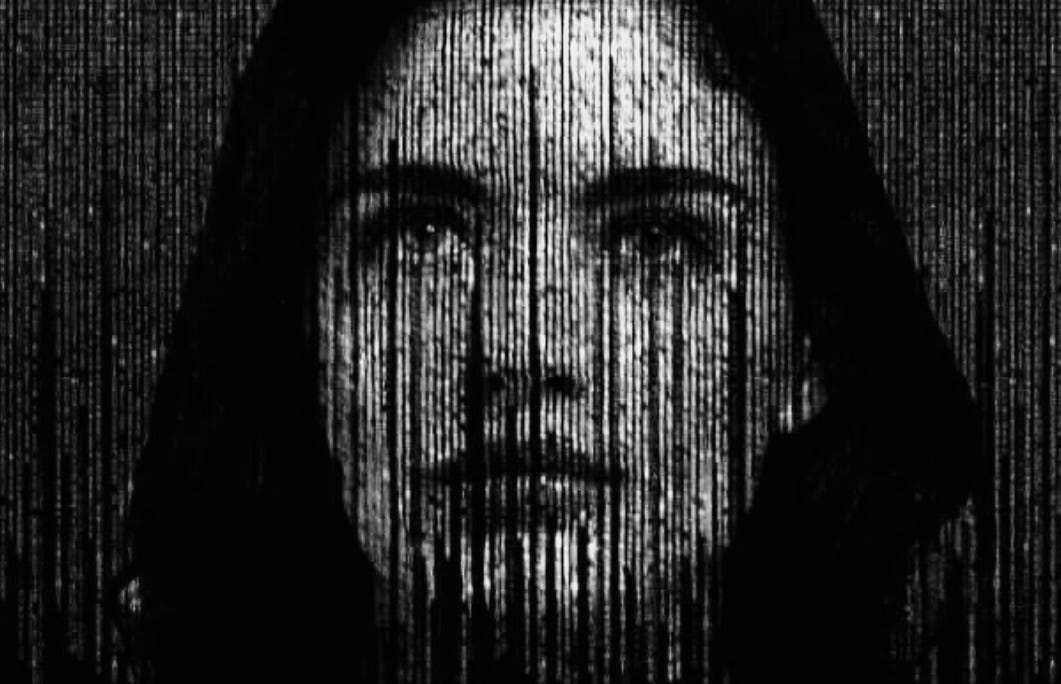
As an exercise, picture all the data points collected about you from Amazon, Google, Meta, Spotify et al, and whatever else is out there, and put them on a blank timeline. The timeline shows what music you listened to, the books or podcasts you ordered, the food you consumed, maybe your opinions about current events, your hobbies, where you live, what you drive. If you had ten million of those pieces of information, could you recreate YOU? Could you describe what is in your heart and what makes you tick? The answer is unequivocally no. What you could create is a superficial picture that someone else (or a computer program) could evaluate and form a general profile from, but it is still just a two dimensional picture, projected on a flat screen. But turn it sideways, look behind the screen and imagine all the other indescribable things about you; the things that motivate and inspire you, that make you feel present and alive. This living, breathing amalgamation of feelings, emotions, hopes, intentions and desires cannot be captured. This is the three dimensional you that big data will never comprehend. This is your anti-data, and it is infinitely larger and more profound than mere information.
As an inherently social species, the idea that we can connect digitally with any significant degree of meaning is farcical. Emails, texts, likes and shares cannot convey real human experience. Like the song says, Ain’t nothing like the real thing, baby. Big data seems to think that they can convince you otherwise. Companies referred to as “data brokers” with names like Neuro-Insight and Mindshare are actively buying and compiling your data, building what basically amounts to a Sim, and selling this profile as you, the consumer. Spotify is currently attempting to patent what they call “Emotion Detection Technology.” Think about that. The hubris to think they can detect or predict your feelings. Pardon my French but they can fuck all the way off with that.
Resistance
On the other end of this spectrum we have actual humans interacting and sharing information through conversations, physical touch and movement, eye contact, group activities, concerts, baseball games, meals across a table. In real time. I never would have thought that we’d have to consider the value of these things contextually against a digital experience, but the data brokers are trying to convince us that what they’re dealing carries similar value, and you’ll be fine if you just keep scrolling and streaming. And the more you do, the more they get.
When you look at the size and scope of the data machine, coupled with a sort of shoulder-shrugging acceptance of this new paradigm as if it were completely inevitable without our participation, it eerily resembles some popular sci-fi metaphors, like Star Trek’s The Borg. They’d like us to believe that resistance is futile, but it’s not. If each of us steps up to support artists in grassroots ways, we can push back against the algorithmic tidal wave with small efforts that when combined can foster real change.
I have this dystopian image in my mind of live bands, zine creators, DIY venues, fans and artists of all kinds as a group of rebels actively pushing back against a metaphorical Death Star of greedy corporate Palpatines with every live show, flyer, hand crafted silk screen and cash transaction. Unfortunately I think my vision has become all too real, and this resistance truly necessary.
Robot Chicken, Star Wars Yo mama fight, 2010
Folks like Ceci Sturman and Hannah Pruzinsky are two people at the forefront of this battle. As the creators and stewards of GUNK, a free/donation-based monthly zine and show paper (printed at Secret Riso Club and assembled & distributed by community, volunteer effort) that highlights almost every small venue, indie and DIY show across NYC, they are making a huge off the grid impact in the music scene in New York and beyond.
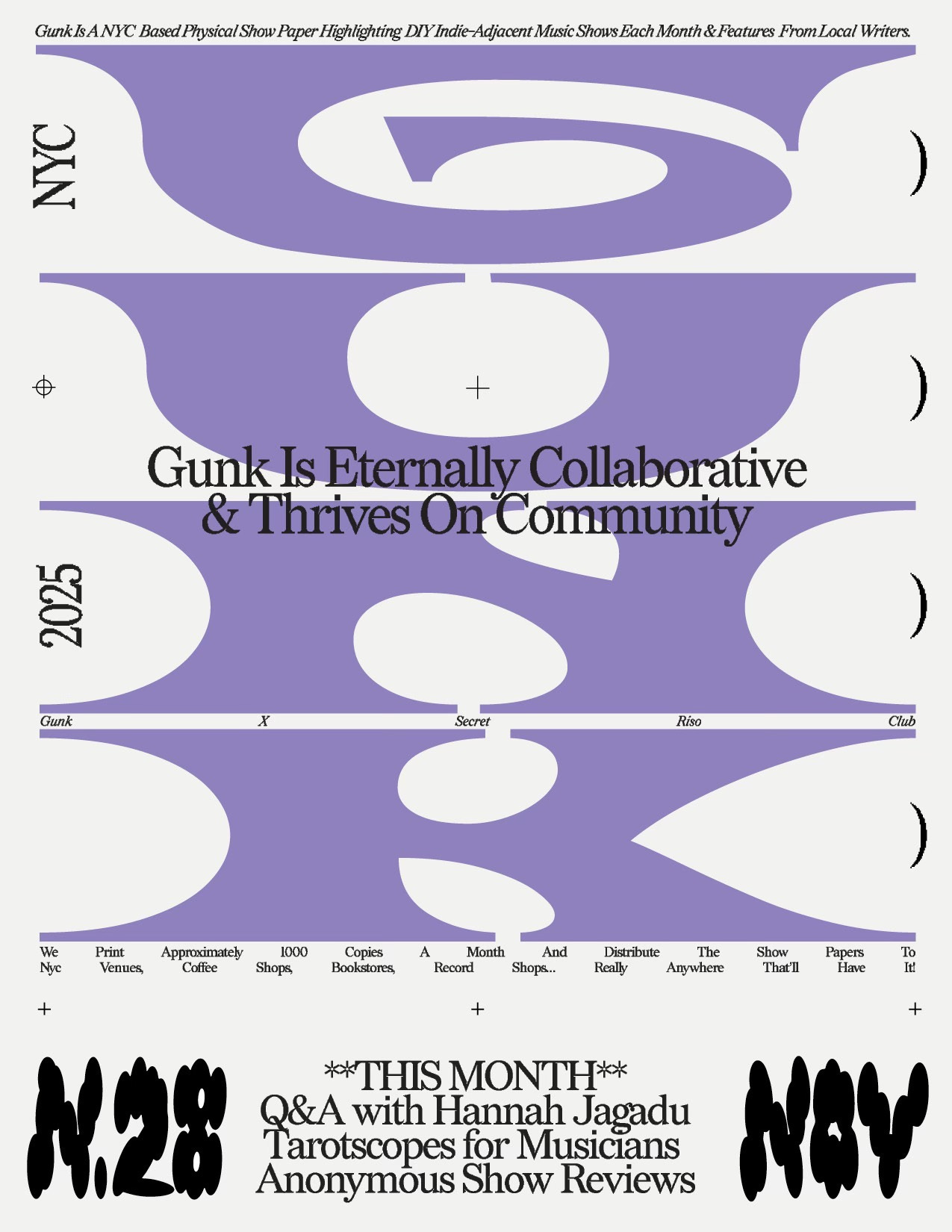
GUNK No. 28, November 2025 (Side note: GUNK has dedicated considerable editorial space to voter education and the Zohran Mamdani campaign over the past year. Great work, everyone!)
Venues that pay artists directly and don’t take a cut of band merchandise are also helping keep money in the hands of the artists. There are so many ways to support artists that don’t involve Spotify, Apple Music, Live Nation et al, and they’re honestly not that hard to do. Go to a show, buy merch, buy digital and physical music on Bandcamp (on Bandcamp Fridays if possible), etc. Subscribe to a zine like GUNK or support a Patreon or Substack account, or just help promote artists through word of mouth. Excuses are few and far between to not participate in the resistance.
“Sort of like every other effect in every other industry, giving AI more grip and power into the music industry serves the purpose of greatly disconnecting us from each-other, and severely losing the humanness and community of it. Nothing can ever replace the feeling of going to a live show and hearing a band hit a fucking awesome instrumental together, feeling vocals echo through the walls and the floor, and looking at the people around you to be like okay that rockkkedddd, but GUNK tries to bring it a little closer to that and as far away possible as we can from a really stupid and lifeless streaming culture that is now just boosting fake songs so artists dont have to get royalties. We wanted to create something that existed in physical form that could be a gift and a resource to our community, uplifting local writers and creatives. People really just want to be close to each other and we’ll always go to bat for that fact in and of itself.” ~Ceci Sturman (GUNK, Sister.)
In my recent experience, I see bands becoming sounding boards for each other, as they cross-promote and support their collective work. Just from following a handful of artists from the NYC, Burlington and adjacent music scenes, I have discovered scores of amazing independent artists and bands that are shaping the future of music outside of the algorithm bubble. Make no mistake, this is the direct result of promotion by the artists and record labels themselves, and it’s a never-ending process of discovery if you’re paying attention.
Pelly’s book as well as some of the more recent developments around Spotify’s investment in AI weaponry have cemented my belief that the absentee listener, Matrix-like streaming model is not and was never good for the listener, the artists and their communities nor the art itself. The following quote from Mood Machine sums it up pretty succinctly:
“Spotify [has created a model that is] all bolstered by a data-optimized system where success is determined simply by whatever moves the needle or fills the background. Taken to its logical endpoint, that’s a mode of engagement that becomes hostile to art.” ~Liz Pelly, Mood Machine
We’ve already gone pretty far down the rabbit hole of an algorithmically created reality, but hopefully not so far that we can’t extricate ourselves and at least partially undo some of the damage already done.